Hermès Craftsmanship Analysis: 5 Key Details Collectors Often Examine
发布时间:2026-06-10 00:00 来源:GalaxyLuxHermès Craftsmanship Analysis: 5 Key Details Collectors Often Examine
Introduction
Hermès is widely recognized for its exceptional leather craftsmanship and meticulous attention to detail. Beyond design and rarity, experienced collectors often evaluate a handbag by examining the finer aspects of its construction.
Elements such as silhouette, edge finishing, rivet installation, foil stamping, and hardware engraving can provide valuable insight into overall craftsmanship quality.
Using the sample images provided, this article explores five details collectors commonly examine when evaluating luxury handbags.
1. Silhouette
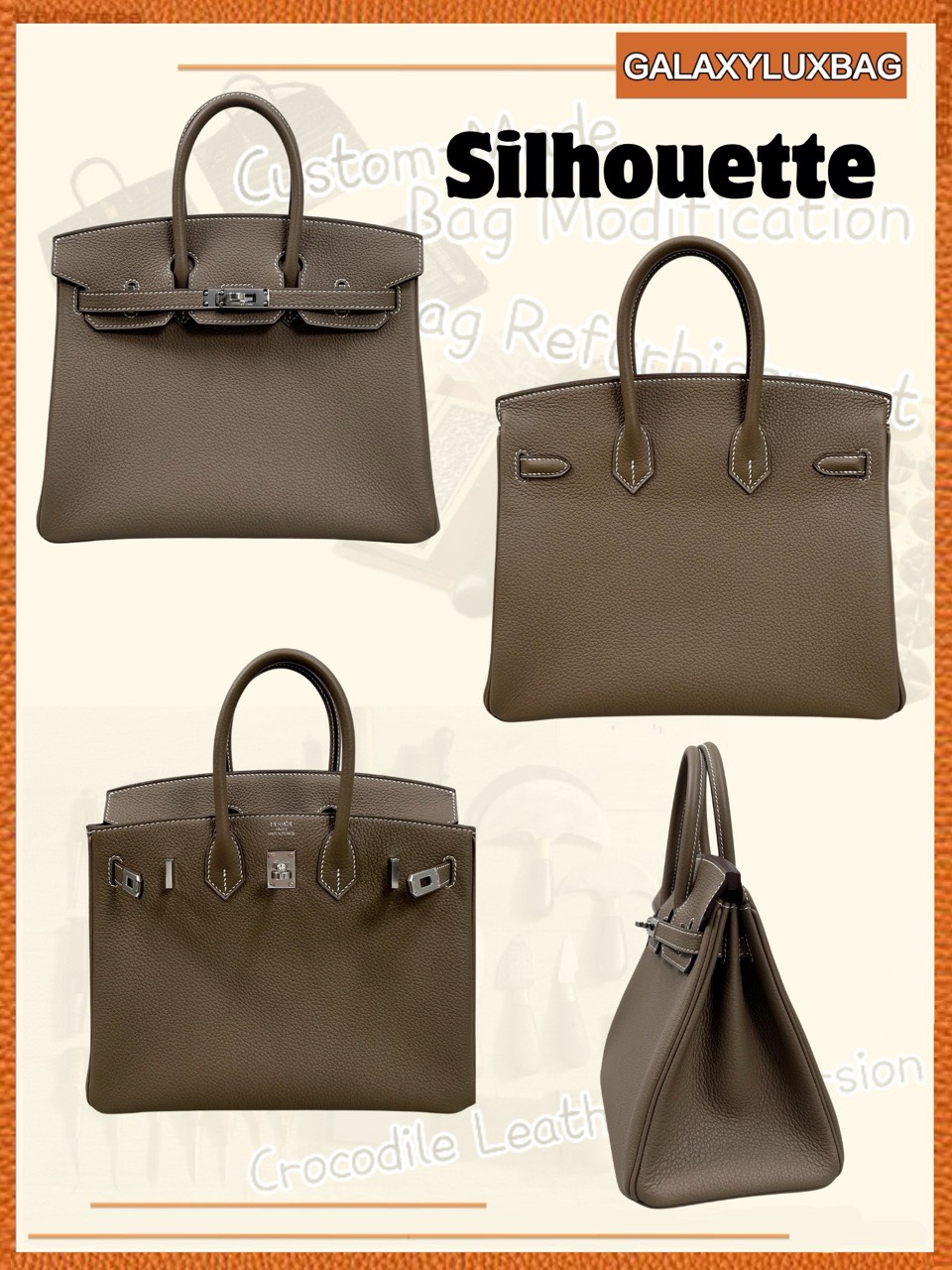
The overall silhouette is often the first aspect collectors notice when examining a Hermès handbag.
A well-balanced silhouette should display strong structure, proportional dimensions, and clean side profiles. The relationship between the handles, body shape, and base construction plays a significant role in the bag's visual identity.
In the sample shown, the bag generally reflects the classic Birkin-inspired shape. However, certain viewing angles reveal details in the side structure and overall form that collectors may choose to examine more closely.
Collectors often evaluate:
l Front profile balance
l Side structure
l Handle proportions
l Base shape consistency
2. Edge Paint

Edge finishing is an important element of both durability and aesthetics.
High-quality edge paint is typically smooth, evenly applied, and seamlessly integrated with the leather edge.
In this sample, the edge paint displays noticeable surface texture and visible graininess. Certain areas also appear slightly uneven in thickness.
Under close inspection, the transition between the painted edge and leather surface appears less refined than expected from highly detailed craftsmanship.
Collectors commonly examine:
l Thickness consistency
l Surface smoothness
l Corner finishing
l Overall refinement
3. Rivet Construction
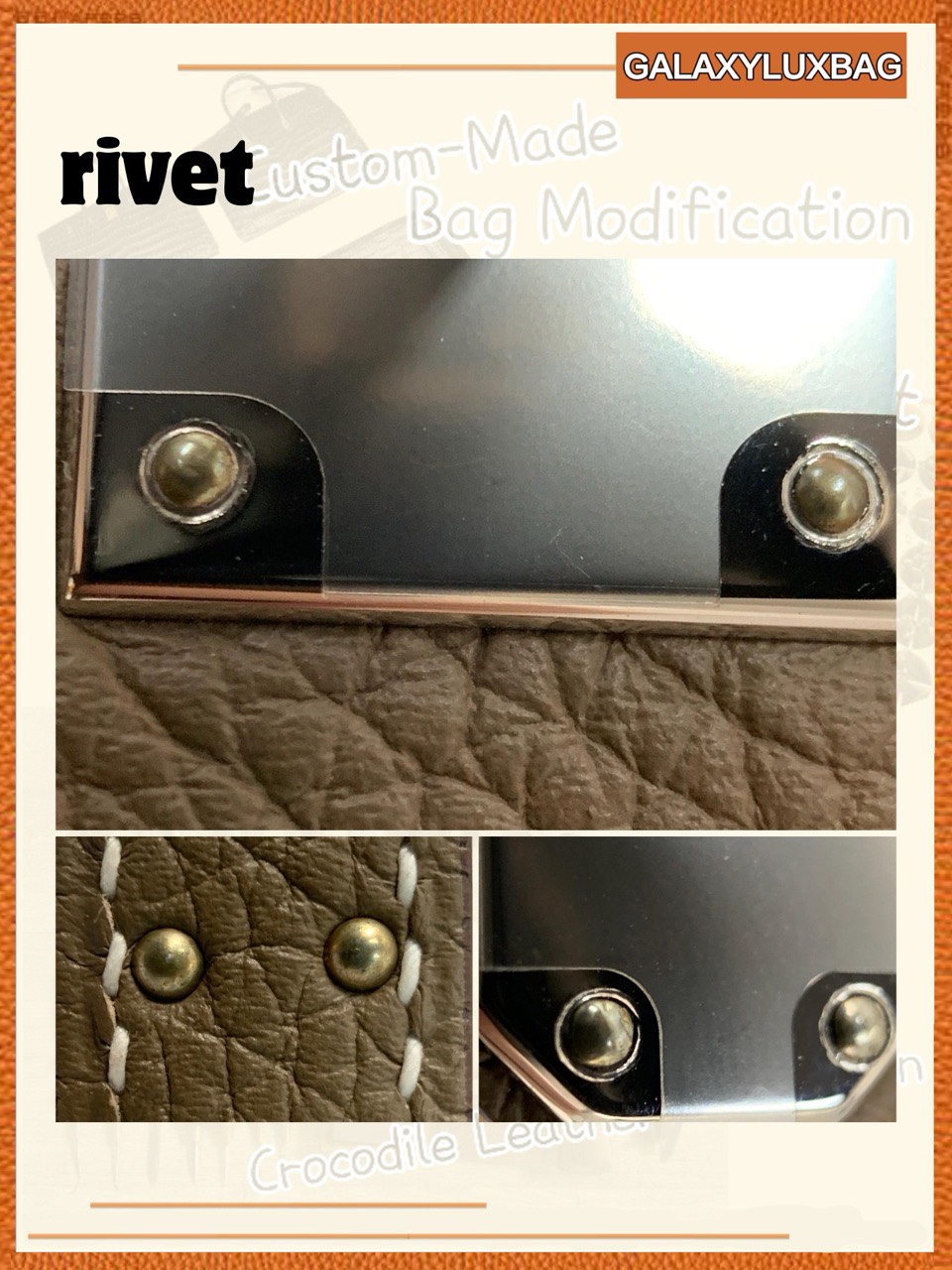
Although small in size, rivets can reveal a significant amount about assembly precision.
Premium installations generally feature accurate placement, clean finishing, and smooth integration between metal and leather components.
In the sample shown, visible compression marks can be observed around the rivet area. The transition between the metal hardware and surrounding leather appears less refined, creating a slightly rougher overall appearance.
Collectors often assess:
l Rivet alignment
l Installation quality
l Metal finishing
l Leather condition around the rivet
4. Gold Foil Stamping
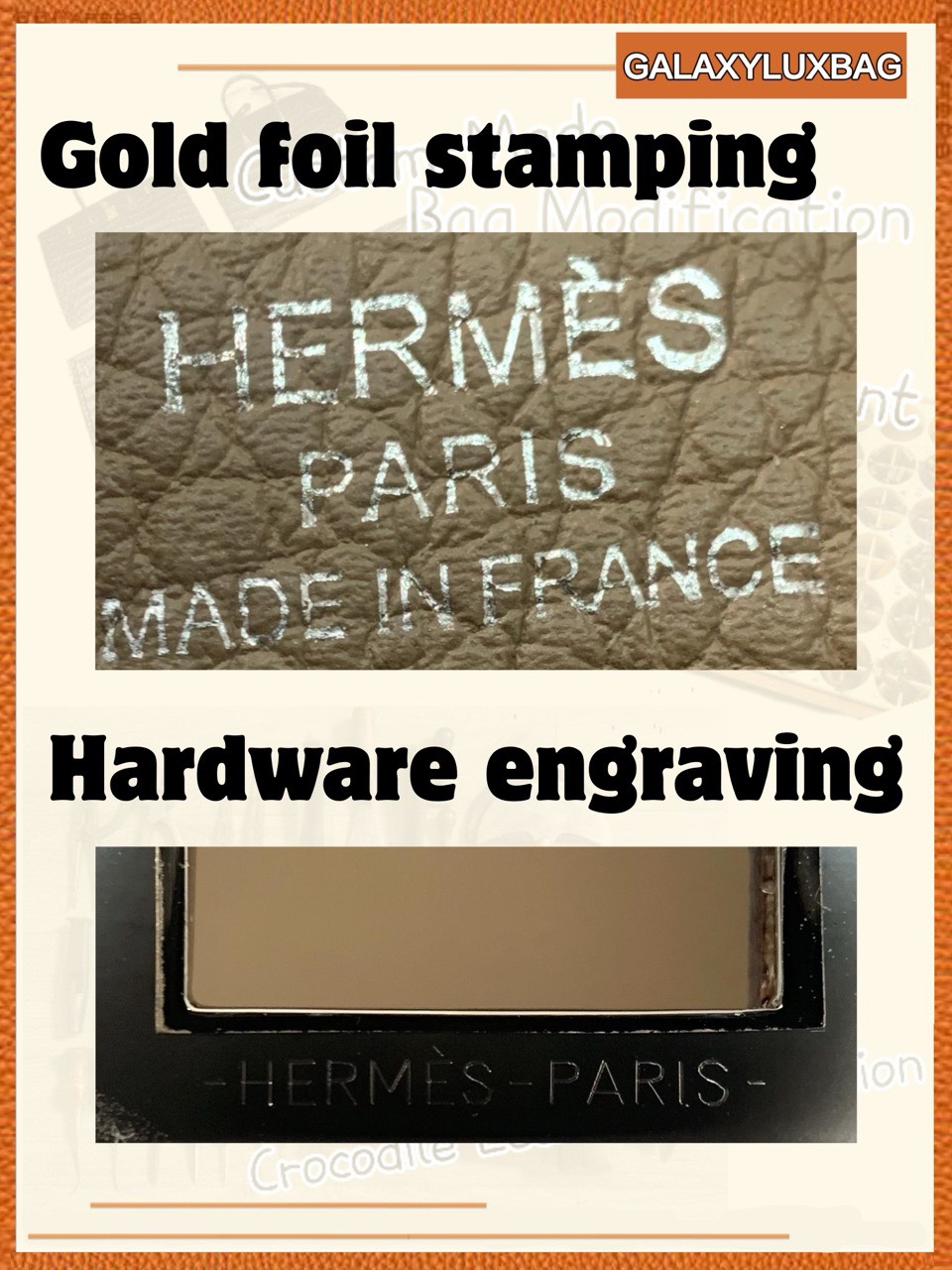
The foil stamp is one of the most recognizable details on a Hermès handbag.
Ideally, stamped lettering should display sharp edges, balanced spacing, and consistent depth throughout the imprint.
In this example, several characters appear softer than expected, with reduced edge definition and visible graininess across portions of the stamp.
These details may affect the overall visual sharpness of the branding.
Collectors commonly evaluate:
l Letter clarity
l Font consistency
l Foil application quality
l Stamp definition
5. Hardware Engraving
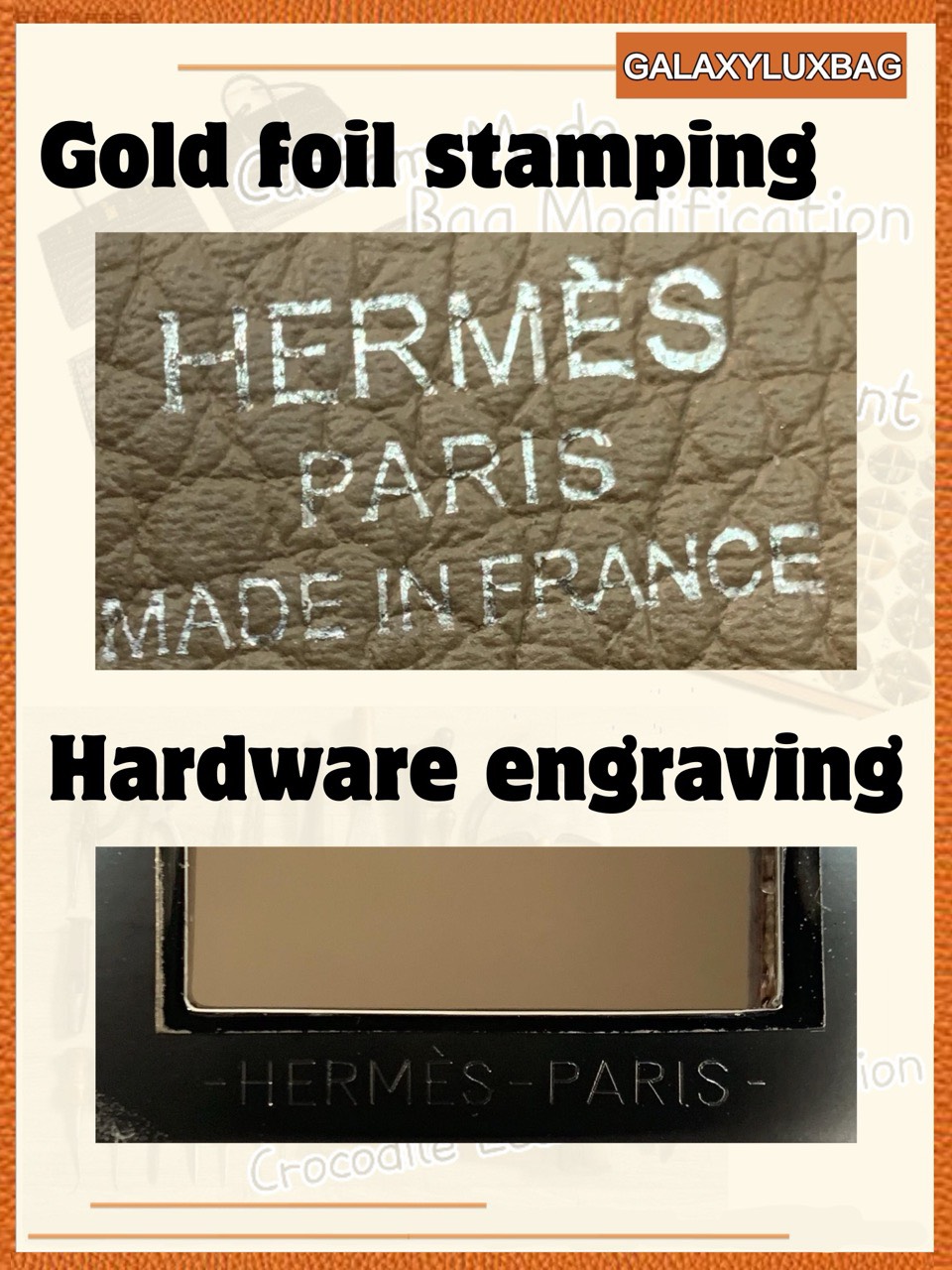
Hardware engraving is frequently used as an indicator of manufacturing precision.
High-quality engraving typically features crisp lettering, consistent depth, and clean character outlines.
In the sample provided, certain letters display slight variations in depth and clarity. Some character edges appear less defined, resulting in a softer overall appearance.
Collectors often examine:
l Engraving depth consistency
l Character sharpness
l Letter spacing
l Surface finishing quality
Conclusion
Exceptional craftsmanship is rarely defined by a single detail. Instead, it is the combination of silhouette, edge finishing, hardware installation, stamping quality, and engraving precision that contributes to a handbag's overall refinement.
By studying these elements closely, collectors can gain a deeper appreciation for the craftsmanship standards associated with luxury leather goods.
Disclaimer: This article is intended solely for educational and craftsmanship discussion purposes. The observations presented are based on the visual characteristics shown in the sample images and should not be interpreted as a definitive authenticity assessment.